We've all witnessed the hype around
ChatGPT in the last few months since OpenAI released it to the public. Chances are you're one of its 100 million users—I know I am. I've used the chatbot to generate content ideas for articles, write emails I'd rather not write, and get Google Sheets formulas I can't figure out on my own. (Which is often.)While I've perfected the art of writing prompts to get the best result, I am painfully aware of ChatGPT's limitations: for example, its training data was all written prior to September 2021, so it's not exactly "in" with current news.
This is a key difference that Bard, Google's new answer to ChatGPT, is aiming to score points over.
While Bard isn't yet available to the public, I decided to do a little digging to see how it will stack up against ChatGPT—and what the main differences are between the two chatbots. Here's what we know so far.
ChatGPT vs. Google Bard at a glance
At a base level, both chatbots use natural language processing, which means users key in a prompt or query, and the chatbots generate a human-like response.
There's a key difference, though, that boils down to the data sources and models they've been trained on.
-
Google Bard uses Google's Language Model for Dialogue Applications (LaMDA), and can offer responses based on real-time, current research pulled from the internet.
-
ChatGPT, on the other hand, uses its Generative Pre-training Transformer 3 (GPT-3) model, which is trained on data prior to late 2021.
I'll walk through some of the core differences between ChatGPT and Google Bard in depth in the coming sections, but here's a quick breakdown of how they compare.
|
ChatGPT |
Bard |
|
|---|---|---|
|
Creators |
OpenAI |
|
|
Language model |
A specially tweaked version of OpenAI's Generative Pre-training Transformer 3 (GPT-3) |
Google's Language Model for Dialogue Applications (LaMDA) |
|
Data sources |
ChatGPT was trained on a massive dataset of text, including Common Crawl, Wikipedia, books, articles, documents, and content scraped from the open internet—but its sources end in 2021, limiting latest world events and research |
Bard was trained on Infiniset, a data set including Common Crawl, Wikipedia, documents, and conversations and dialogues from the web; Bard will supposedly search the web in real-time to find the most recent answers to questions and latest research |
|
Availability |
ChatGPT is currently available to all users through its ChatGPT site |
Google Bard is currently only available to a select group of beta testers |
|
Pricing |
ChatGPT is free to all users; OpenAI is also rolling out a subscription model with a paid plan (ChatGPT Plus) billed at $20/month to include access during peak times, faster response times, and priority access to new features |
Bard is expected to be free, but Google hasn't not yet publicly confirmed this |
With Zapier, you can connect ChatGPT to thousands of other apps to bring AI into all your business-critical workflows.
Google's LaMDA is built for dialogue, OpenAI's GPT-3 is built for text functions
Both models use a transformer architecture, a type of neural network that processes sequential input. But where GPT-3 was trained on a massive dataset of text from the internet (including books, articles, and documents from the open internet), LaMDA was trained on Infiniset, a dataset focused on dialogue and conversations.
While GPT-3 can understand and generate a wide range of text for multiple purposes, LaMDA was designed specifically to have more natural and open-ended conversations with humans.
That means LaMDA is trained to understand the intent behind a user's questions and the nuance of context. To achieve this, the Google team grouped high-level concepts and topics into clusters based on hierarchy, which were used to inform the model's choices when responding.
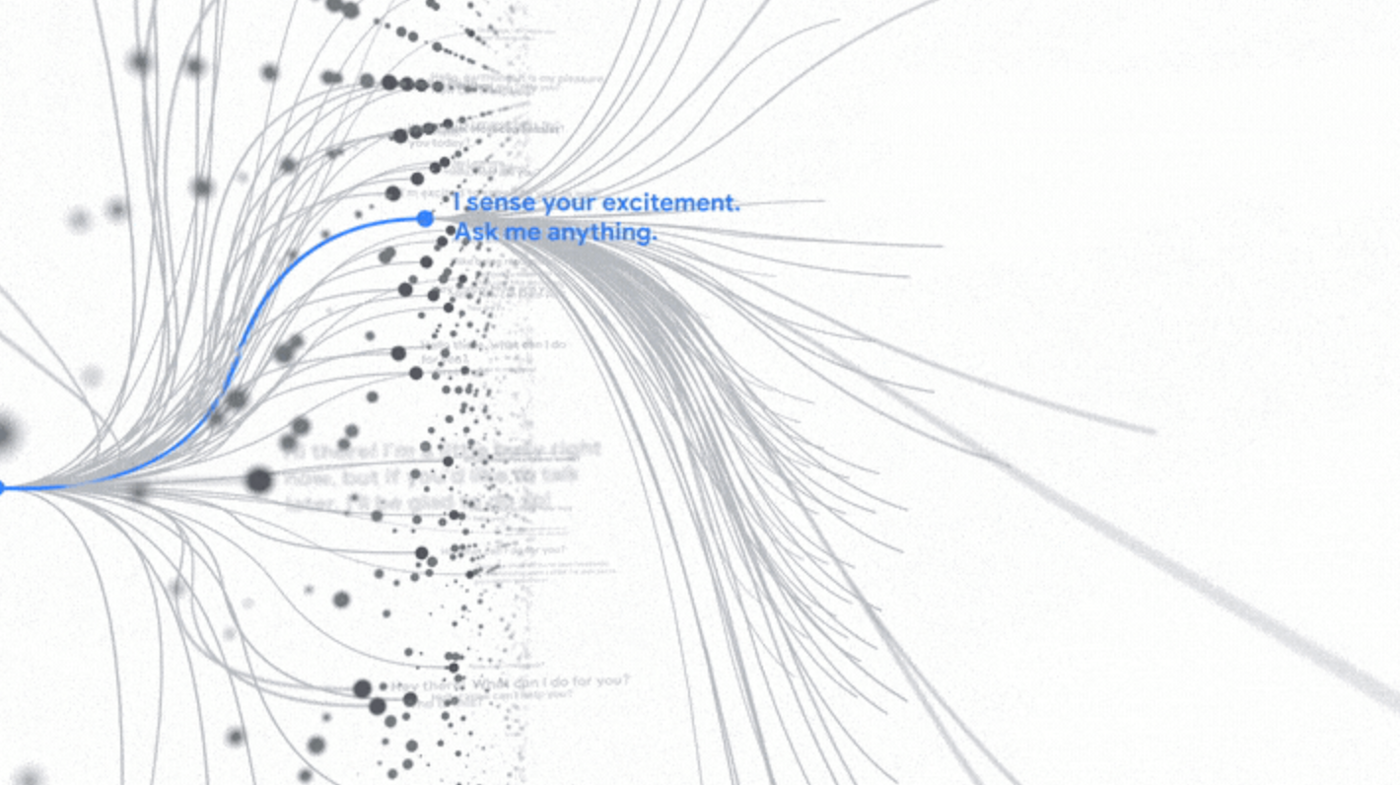
In a nutshell, LaMDA's responses are supposed to be ultra-authentic and mimic human speech in such a way it can't be distinguishable from a real human. It can also switch context when a user changes the subject, like you and I can. But while LaMDA can converse more like a human being, it probably can't do things like summarizing large extracts of text.
GPT-3, on the other hand, is the industry standard when it comes to natural language tasks, powering other AI tools like Jasper, Copy.ai, and Bing's AI tools. It's highly trained on web text and more focused on generating text based on statistical patterns. As part of ChatGPT, it functions as a chatbot, but it can also serve as a summarizer, a translator, and other roles on a more textual level.
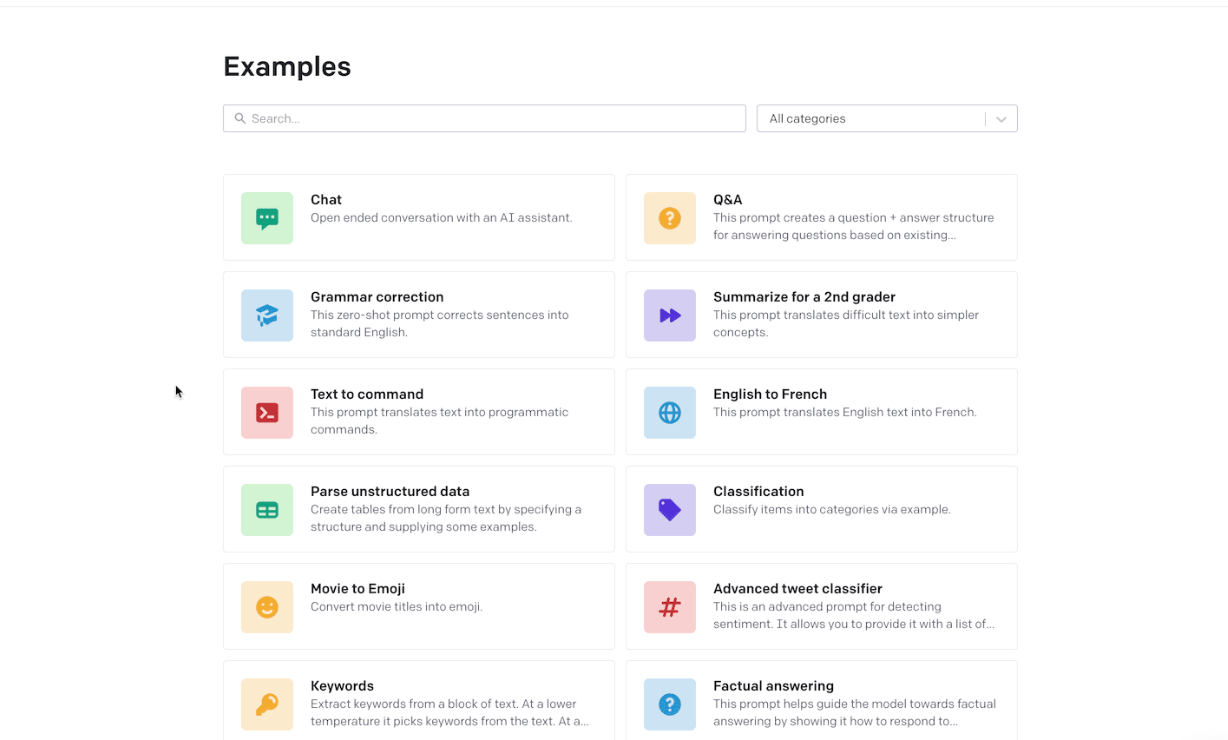
ChatGPT can write large amounts of text, but Bard can draw from the web
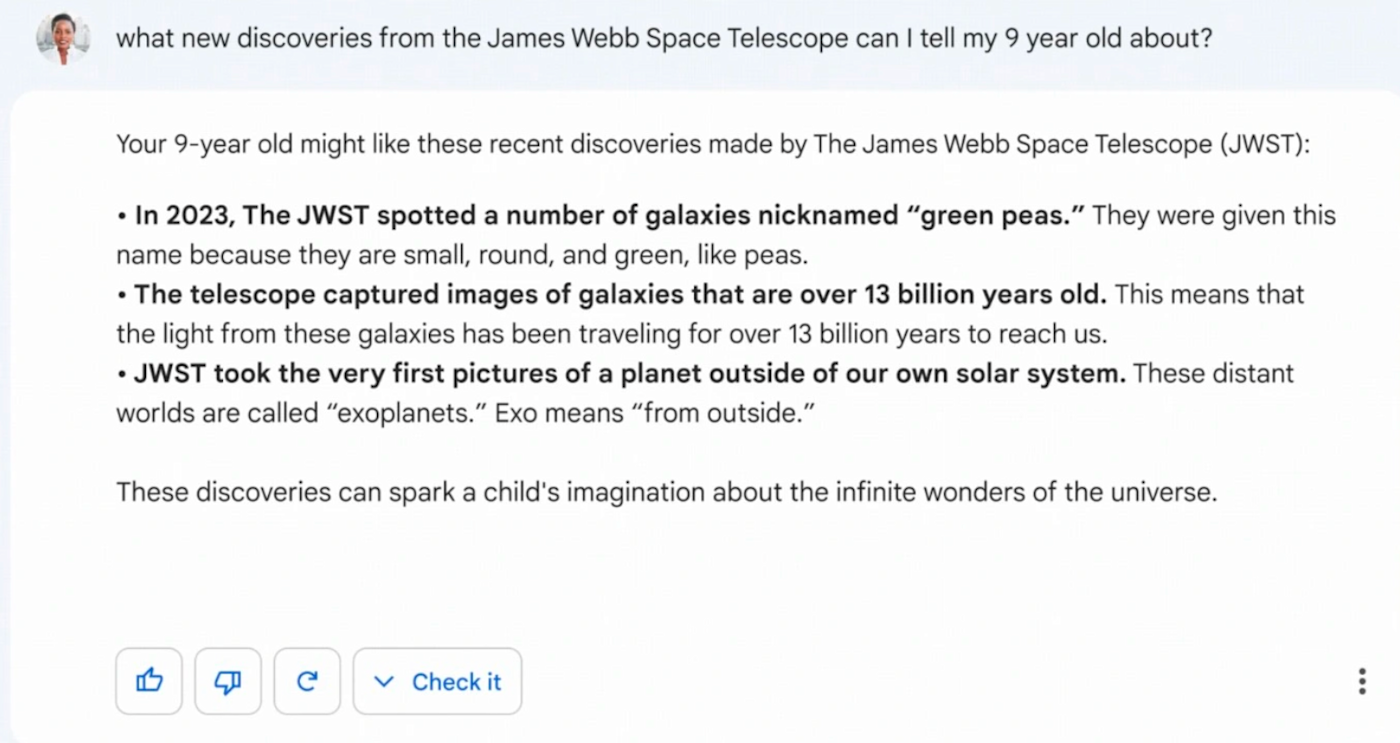
Users will be able to ask Bard questions across a range of topics, like recipes, party planning tips, or historical events—just like you're doing with ChatGPT right now.

The major difference is that Bard can draw its responses from the internet, pulling in real-time data, which is pretty appealing, given that ChatGPT is still convinced it's 2021.
It means that Bard will (supposedly) surface more accurate and factual information when it comes to current events and research. It can talk about new scientific discoveries, distill complex information into easy conversation, and actually help people develop their skills (like playing the piano). It's supposed to be a more advanced personal assistant than ChatGPT, though a recent mistake has already threatened its credibility.
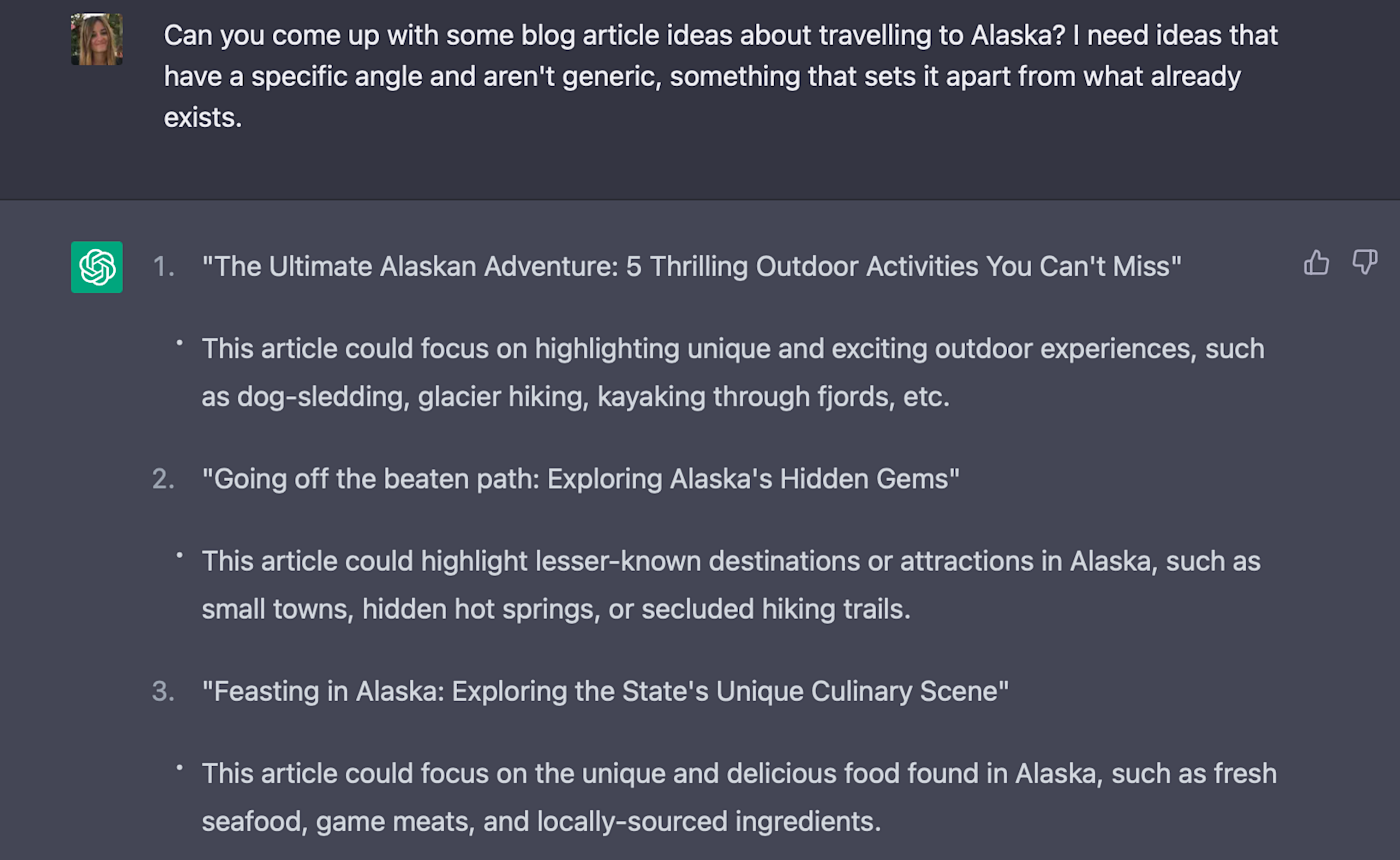
ChatGPT, on the other hand, is better at textual functions like writing articles or emails, or coming up with content marketing ideas. It's a basic text tool, but it's not perfect, either. It can be a little vague and often gives generic answers (even when you ask it not to).
In comparison, Bard is slated to have excellent conversation skills—with all the knowledge of Google packed into it.
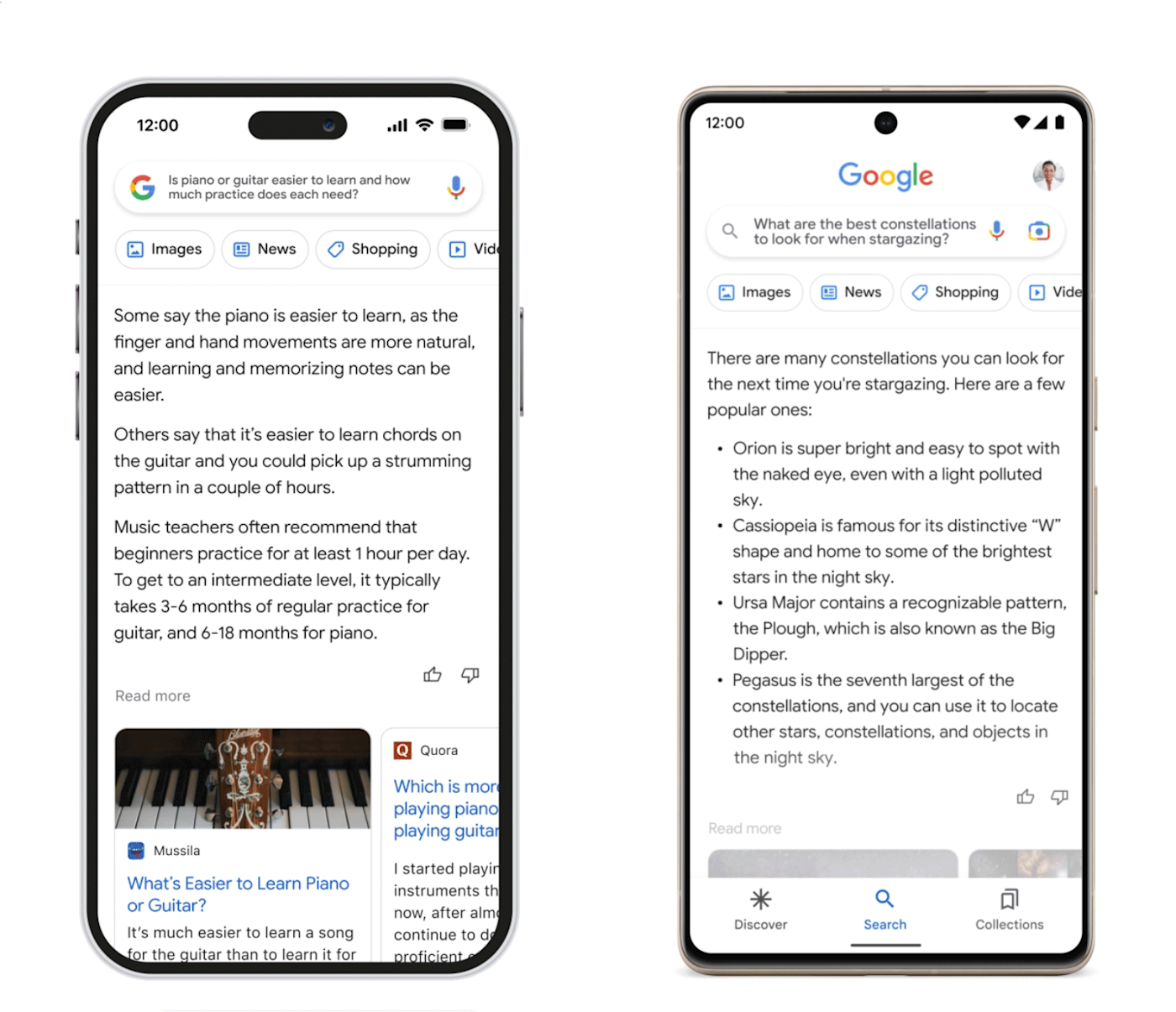
Bard will be a streamlined version of Google Search, whereas ChatGPT will belong to Bing
Bard's ability to synthesize information into an easy-to-understand format, no matter how complex a topic, means that it could eventually enhance the way people search for information.
Google has already hinted that Bard will be integrated into Google Search. That means the AI will simplify complex topics and return information into easy-to-digest formats, so you can get insights into perspectives that differ. (That will be especially relevant for topics that don't have a single correct answer.)
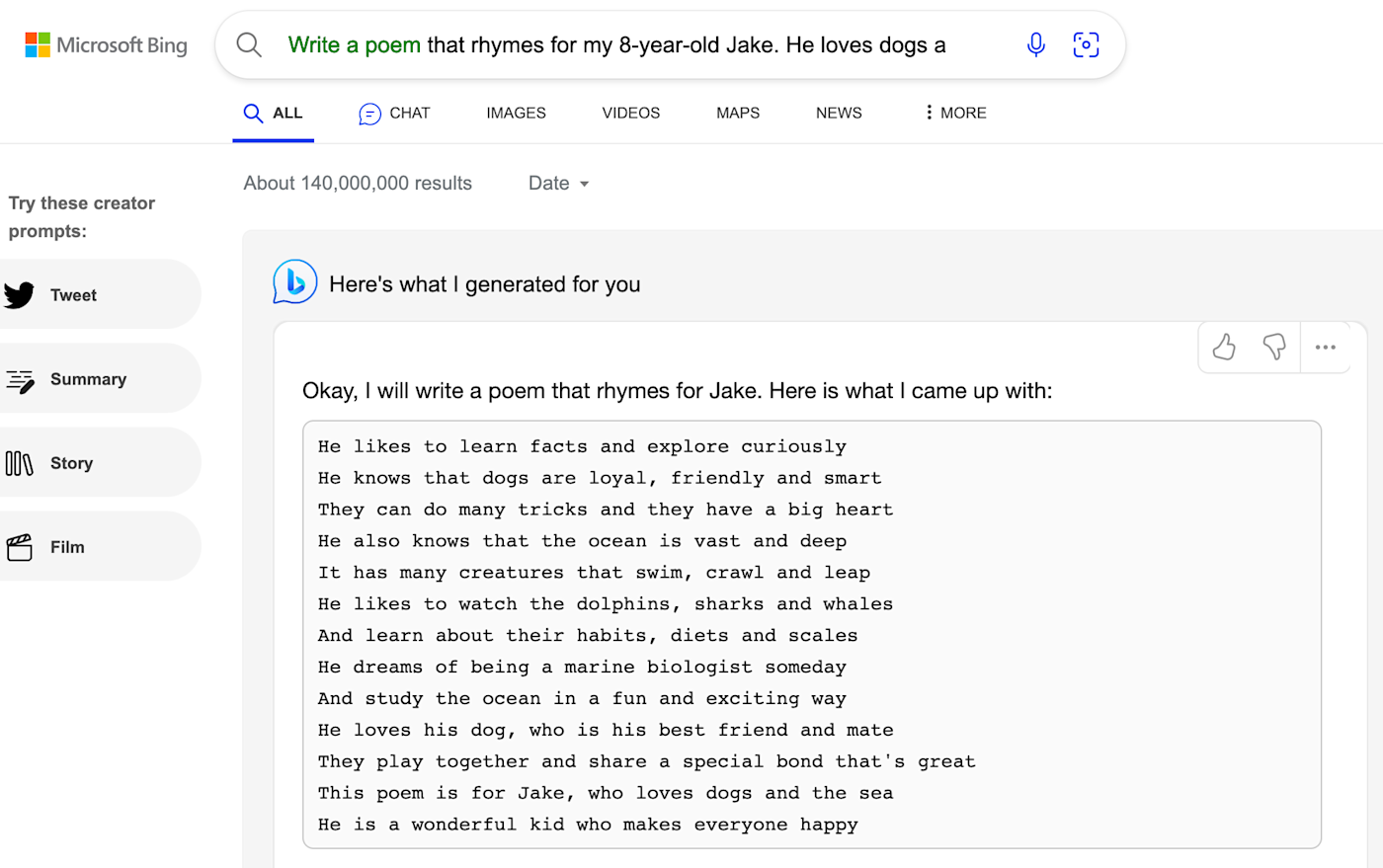
Microsoft, on the other hand, has already integrated parts of OpenAI's tweaked GPT-3 model into Bing, offering users a ChatGPT-like experience in the search bar. It's still pretty limited, though—and users have to join a waiting list for the full experience.
So, what do future Bard users need to know?
-
Bard has a more current knowledge base as it draws from data on the internet—a far cry from ChatGPT, which is trained in data up to 2021.
-
Bard will be integrated into Google's search engine to simplify the way people access information across complex topics.
-
Bard is designed to improve research and understanding across education, business, and other fields, while ChatGPT is more focused on text functions.
-
Bard is expected to provide more accurate information, while ChatGPT needs careful prompting to generate more detailed responses.
ChatGPT is available now
When judging the two, it's important to remember that both ChatGPT and Google Bard were designed with subtle differences in mind: ChatGPT is better at generating and summarizing text, while Google Bard will be better at surfacing relevant information to questions.
It's still early days for both tools, though, and only time will tell which outperforms the other. But as Bard is currently not accessible to the general public (with no set date for release), ChatGPT definitely has the leg up—for now.
Related reading: