At my first internship, I often ended emails by saying thanks. I thought it was a polite and professional thing to do. That was, until I was told it made me sound too accommodating and gentle—a comment, likely rooted in sexism, that had me questioning my desire to express my gratitude.
Years later, I've learned that internship Ellie was right: well-placed, intentional thank-yous have the power to transform a workplace.
The benefits of showing appreciation
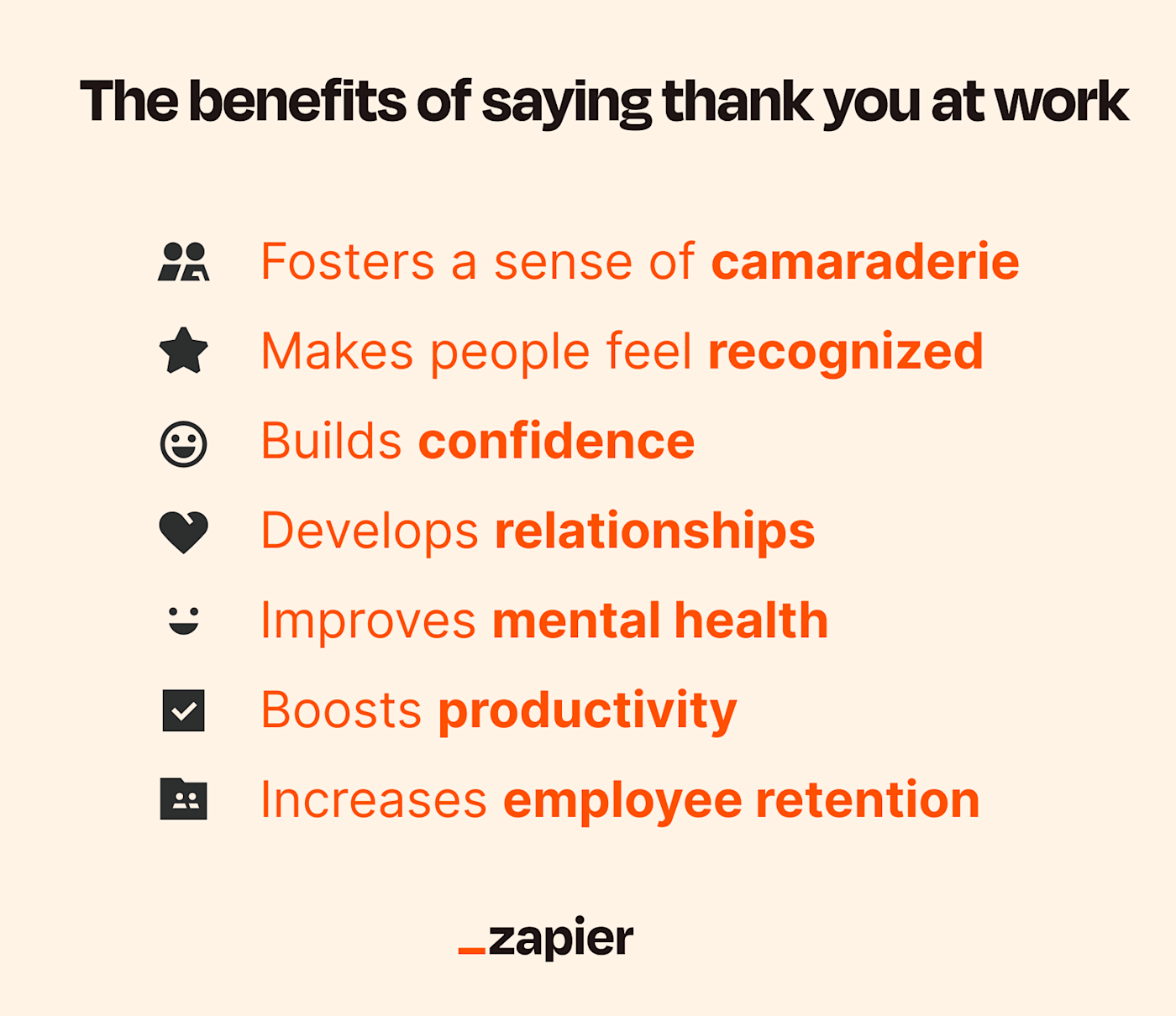
A simple thank-you has the ability to create a positive and productive environment—letting employees know when their work is valued and encouraging them to continue that behavior. Here are a few things I've noticed in work environments where people offer gratitude:
-
It fosters a sense of camaraderie. Saying thank you helps team members understand that they're an important part of a team.
-
It makes people feel recognized. Not everyone needs recognition in the same way, but showing your teammates that you value them can encourage them to continue to step up.
-
It builds confidence. Recognition builds confidence, empowering employees to feel like they can take on more responsibility.
Saying thank you has shown to
bolster morale and mood not just for the person receiving the thank you—but for the person giving it (you) too. For example:-
It helps you builds relationships with coworkers. Showing appreciation for team members makes you a teammate they're going to want to keep working with.
-
It can improve your mental health: Many studies have shown that expressing gratitude increases happiness.
And it's not just about the individuals: saying thank you also benefits the company as a whole.
-
It creates a more productive work environment. By recognizing when team members do a good job, they're more inclined to maintain that behavior.
-
It can increase employee retention. Employees that feel valued are more likely to stay in that company instead of looking for other opportunities.
How to say thank you (and mean it)
If you're just throwing out thank-yous without intention, it defeats the purpose. Too many thank-yous—or thank-yous that are insincere or too general—can come across as disingenuous. So, how do you give thank-yous with some oomph?
There's no one-size-fits-all approach. Each person and situation is going to warrant a different thank-you.
For starters, you should decide if you want to thank someone privately or in public—each has its place.
|
Private thank-you |
Public thank-you |
|
|---|---|---|
|
What is it? |
Shared between two people in a one-on-one setting. Private thank-yous can be on a video call, during an in-person meeting, or in a private message. |
Shared with the team or entire company. Public thank-yous can happen in team or company calls/meetings as well as in public message channels. |
|
When should you do it? |
A private thank-you allows for more intimate conversation or recognition that you might not want everyone to see. For example, if a teammate helped fix a mistake for someone else, expressing gratitude in private ensures you don't call out anyone in front of others. |
When you want coworkers and teammates to recognize and join in on the thank-yous, or you want to use the opportunity to model behavior (or even model the act of gratitude!). |
|
When should you not do it? |
There aren't many times that you shouldn't give a private thank-you. Just be sure it's genuine and specific. |
Think about the receiver: they might not like public attention. Also, when giving public thank-yous, be sure that by saying thank you to one team member, you're not making other team members feel less-than. |
When deciding how to give a thank-you, it's important to consider the situation, the person, and the impact the thank-you will have. Here are a few tips:
-
Don't wait too long. It's important to thank the person in a timely manner. Not necessarily right away, but soon enough after the work that it shows you see their effort.
-
Be specific. State what the person did that you're thankful for. A simple "thank you" isn't enough—you need to tell them why you're grateful.
-
Include action. Depending on what you're thanking someone for, it might be worth following up with a DM to their manager or something else that goes beyond telling them thank you.
How to create a culture of gratitude
Creating a culture of gratitude starts with senior leadership: people in management roles need to set an example by showing appreciation for their employees. There are a bunch of ways businesses can create a culture of gratitude.
-
Create a feedback loop. Regular feedback from supervisors and peers can help create an atmosphere of saying thank you for work, and it also creates a space for ongoing learning and growth.
-
Celebrate successes as a team. Whether it's a new customer acquisition, a big sales win, or a successful project launch, showing appreciation with cake, a team hangout, or just a message shows a team that you've all won together.
-
Create public spaces specifically about gratitude. Acknowledging individual and team achievements can be a great way to show gratitude and appreciation for their hard work.
Here are a few ways that Zapier—a fully remote company—creates spaces for gratitude.
Weekly winbot
Our Corporate Marketing team has a weekly "winbot." It's an automated message that goes into our team Slack channel every Friday, encouraging us to share a personal win or give a team member a shout-out for something they did that week.

When you create space for thank-yous (and managers lead by example), team members will join in on the celebrations.
Gratitude channel
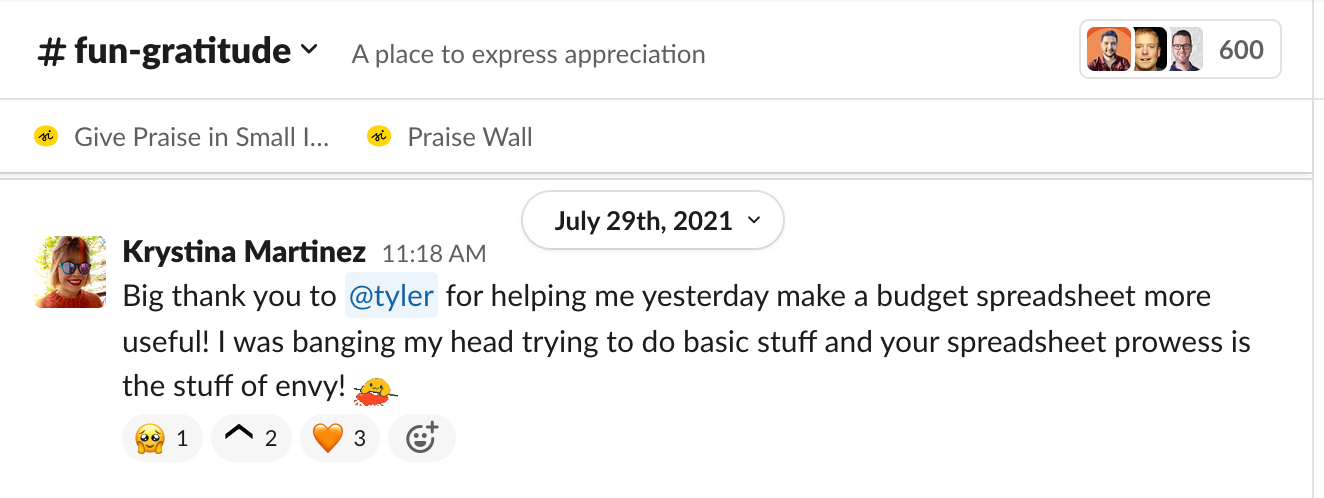
We also have a whole Slack channel dedicated to gratitude. It's an open space where everyone in the company can see appreciation for team members. It's easy to post a message showing your colleagues that you're thinking of them and appreciate their hard work.
The channel (#fun-gratitude) is also linked to the app we use for feedback and performance tracking—so whenever someone gives praise in Small Improvements, it gets sent to this channel too.
Thanks for reading
It brings me joy to think that people are seeking to create a culture of gratitude at work, and I'm grateful you read all the way to the end. Thank you!
Related reading: