Both
Notion andAirtable are basically supercharged versions of simpler apps. In Notion's case, it's a regular old notes app; for Airtable, it's a spreadsheet.They both stem from a similar fast-moving, collaboration-focused project management philosophy, which means that both apps make it possible for you to work with other people, automate various aspects of your setup, and integrate with the other tools you rely on. But when it comes down to it, they're totally different tools.
This makes a straight apples-to-apples comparison hard, but I'll do my best to break things down, so you can work out which one is right for your needs.
Notion vs. Airtable at a glance
For most app comparisons, a table like this can help you see the subtle differences between them. Notion and Airtable are so different that this probably won't give you a complete picture, but it may still help you make a decision.
|
Notion |
Airtable |
|
|---|---|---|
|
Ease of use |
⭐⭐⭐⭐ For all its power, Notion is still pretty easy to use |
⭐⭐⭐ Most people just aren't familiar with using a database |
|
Automations and integrations |
⭐⭐⭐ ⭐ Can integrate with other apps, but it isn't a standout feature; integrates with Zapier |
⭐⭐⭐⭐⭐ Super powerful automations and integrations with dozens of other apps; integrates with Zapier |
|
Collaboration |
⭐⭐⭐⭐⭐ Designed for teams to work together |
⭐⭐⭐⭐⭐ Designed for teams to work together |
Notion does text first
Notion bills itself as "a single space where you can think, write, and plan." It works a lot like a notes app (and can be used as such), but it allows you to build out any kind of text resources.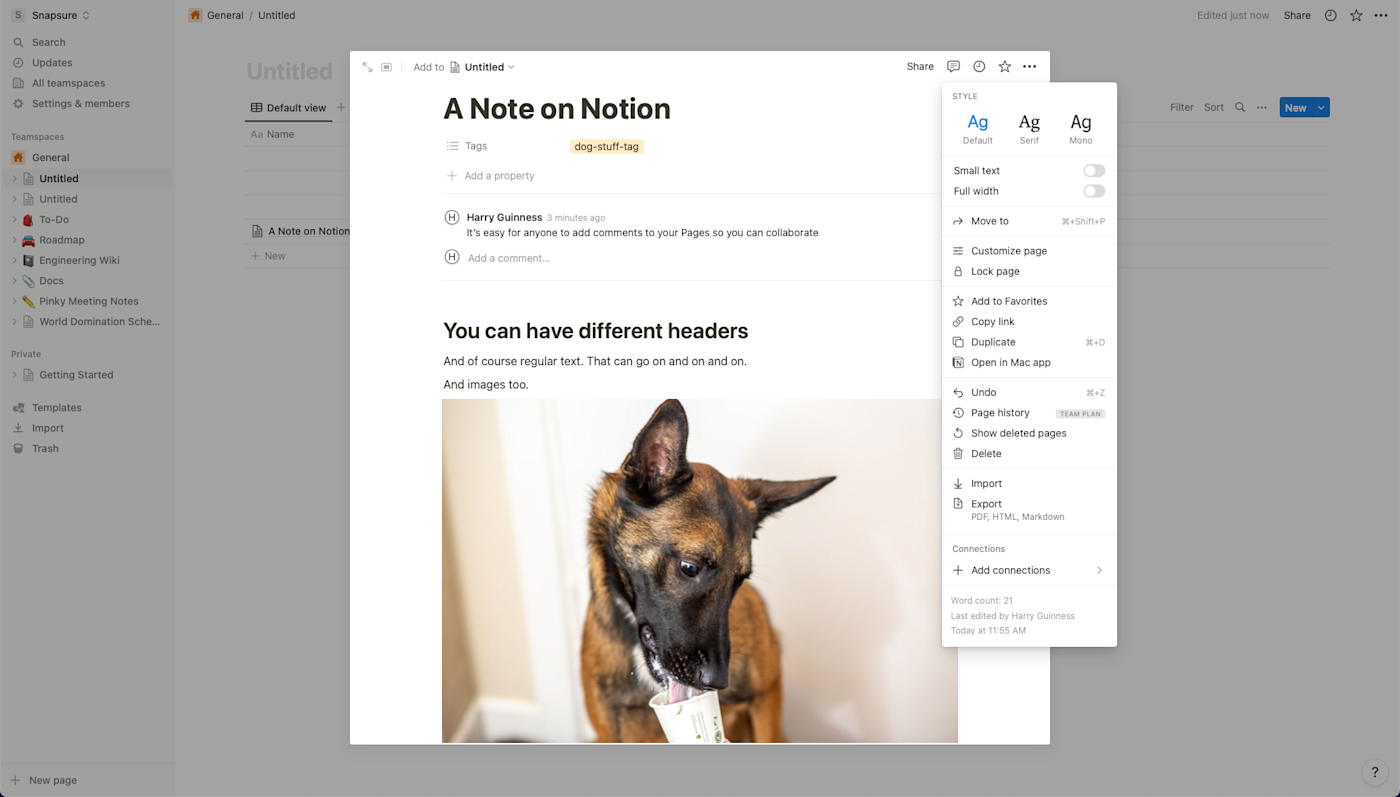
Everything starts with a Page, and you add Blocks—which can be text, images, lists, and lots of other kinds of content. Pages can be nested or grouped together, they can be private or shared, they're taggable and searchable, and they can even be part of a database.
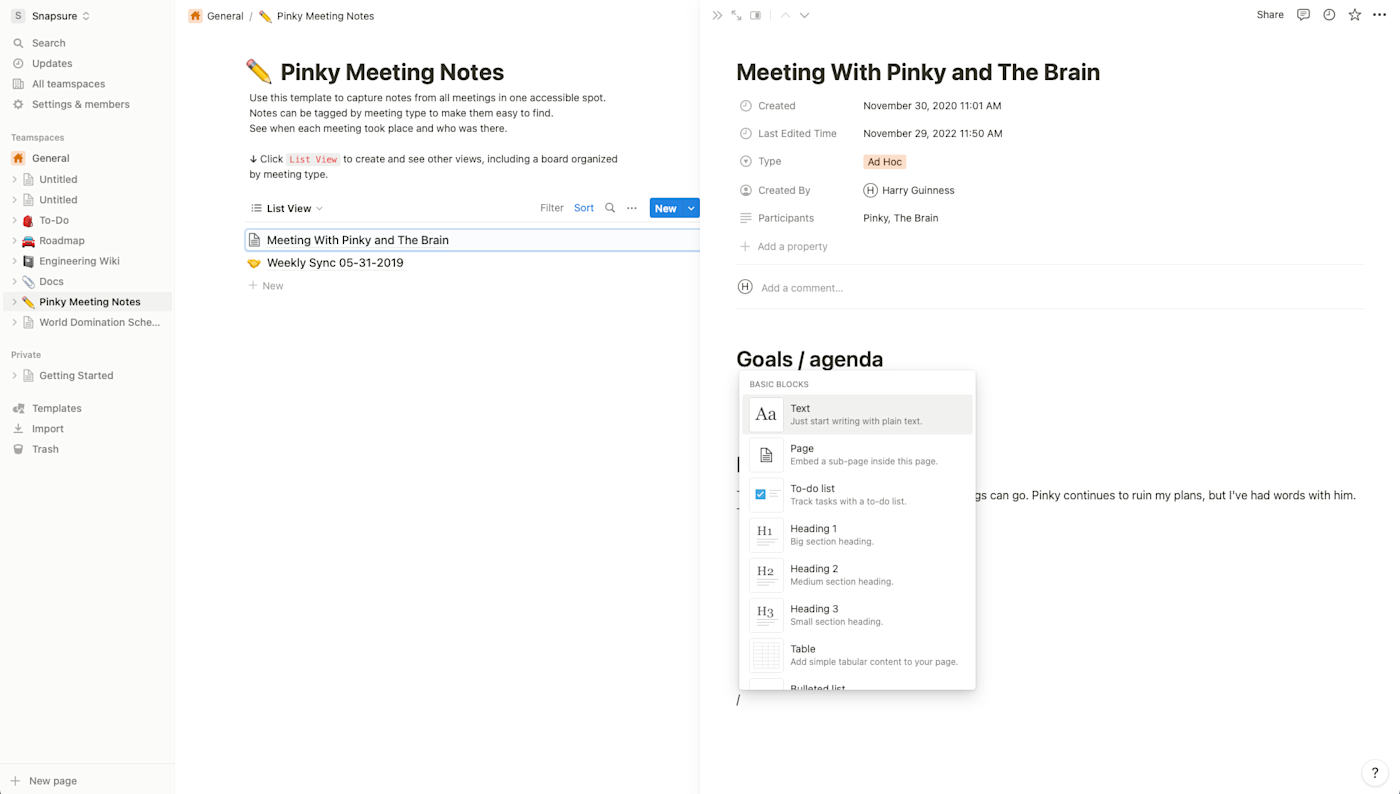
Creating a project roadmap? You can do it in Notion. Does your company need a wiki with the style guide and standard practices, employee database, and all the HR, health insurance, 401k match information, and any other resources? Very simple to do in Notion. What about your team's collaborative meeting notes,
to-do lists with actionable next steps, and Christmas party plans? Once again, Notion has you covered.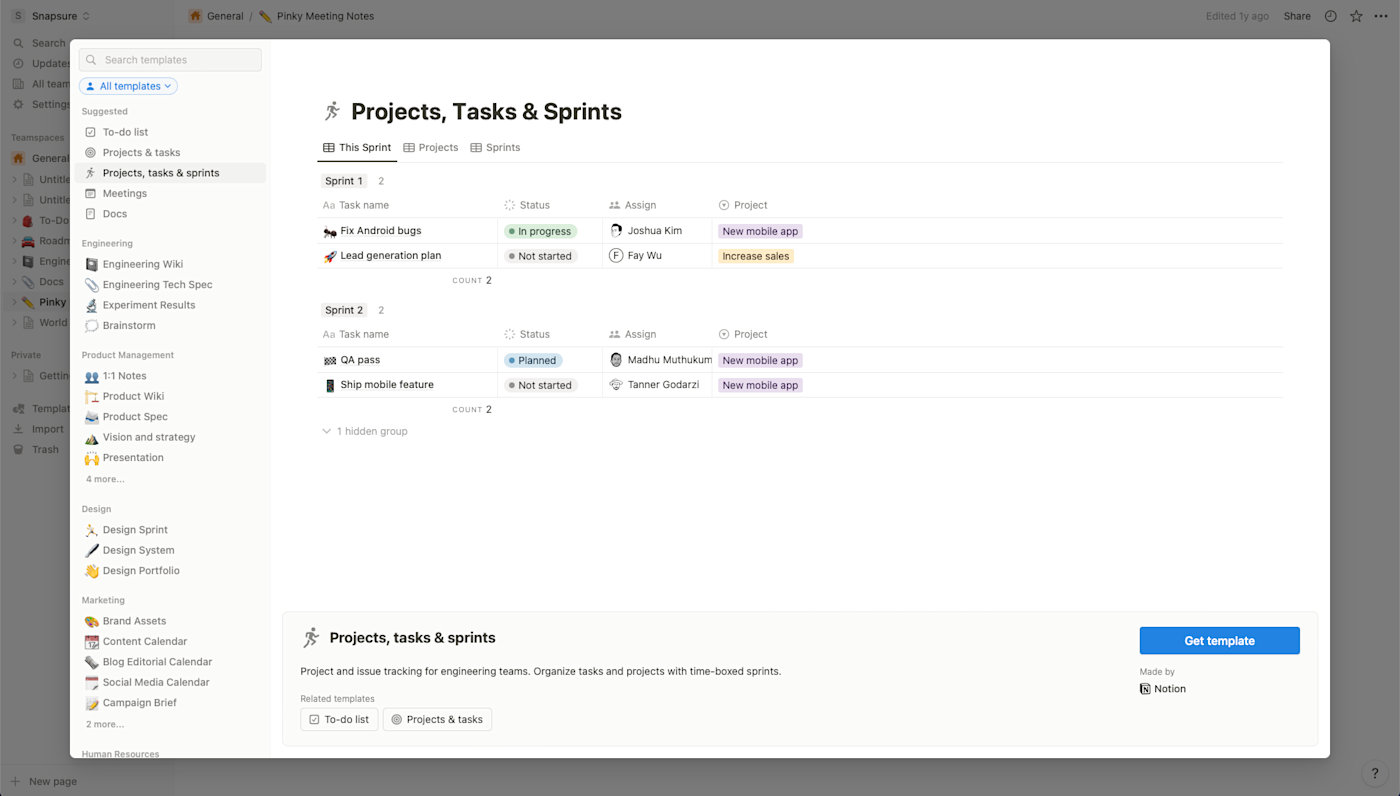
This flexibility kind of makes Notion hard to pin down in specific terms. No two teams or companies are using it in exactly the same way, which means that no two people have exactly the same experience with Notion. (It's also why our roundup for its category of apps is called
The best Notion alternatives—there's not a great name for it yet.) For some, it's more of a notes app for keeping track of ideas during meetings; for others, it's where the entire company is run. It's a very versatile multi-tool, rather than a single application.And while it does support databases—or at least its own concept of databases as tables of pages with various assigned properties—it is still primarily a text-based app. Airtable, on the other hand, is mostly databases.
Airtable does databases first
Depending on how you want to look at things, Airtable is either a big programmable spreadsheet or a more user-friendly
database. Since most people are more familiar with spreadsheets than SQL, we'll take that angle on things.Consider
Google Sheets. It's also a big online spreadsheet app. You can put whatever you want in the various columns and label them however you need. You can create a list of all your employees, their ID numbers, their email addresses, and their home addresses. But by default, Sheets doesn't really know what you're putting into it. You can put someone's email address in the home address column by mistake, and it won't object. Or you can accidentally sort on the ID number column and mix everything up.As a relational database, Airtable solves these problems out of the box. You aren't just slotting information into columns but instead adding specific "records" into specific "fields."
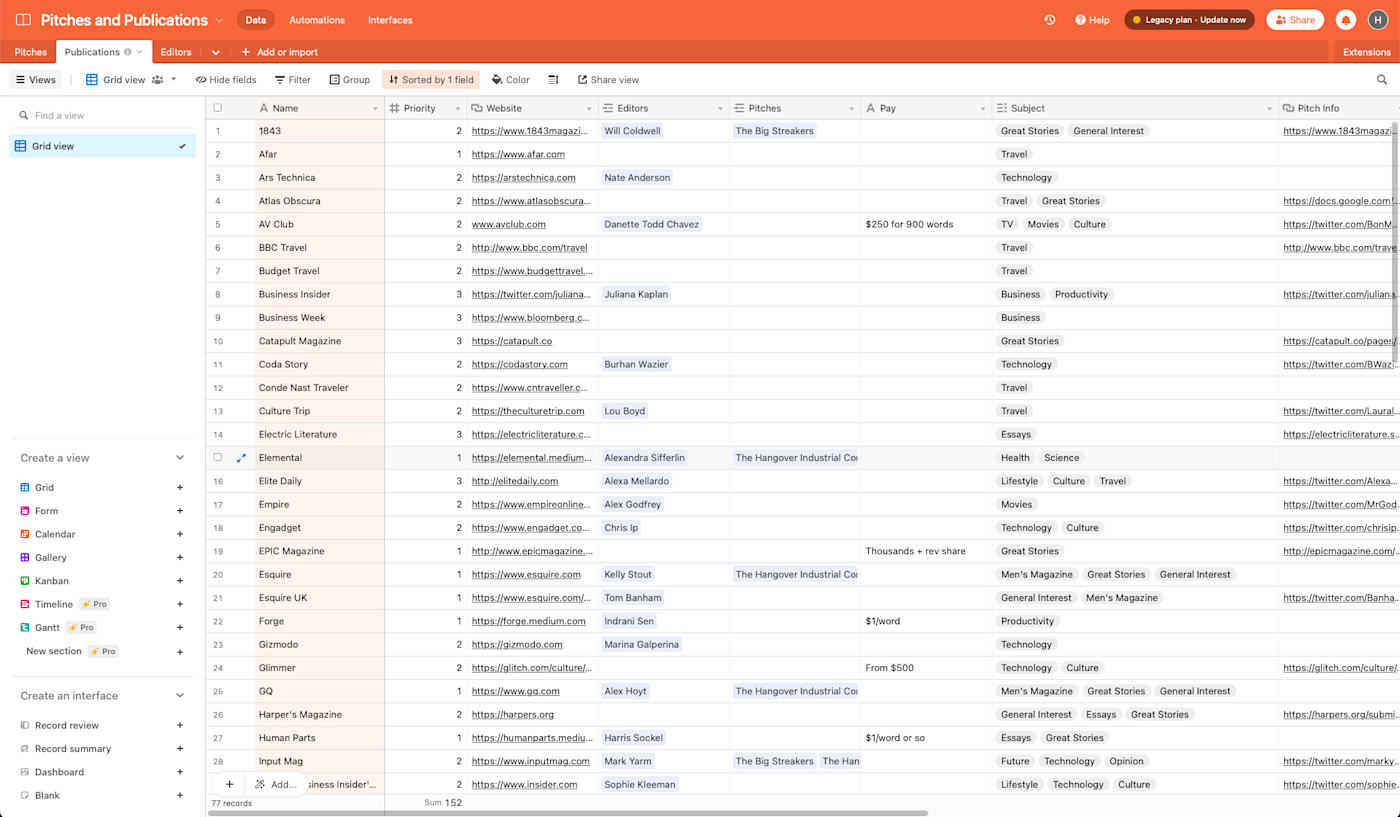
The email address field knows what an email address looks like and won't take a phone number; it's also linked directly to the name and employee number (because it's all part of one record).
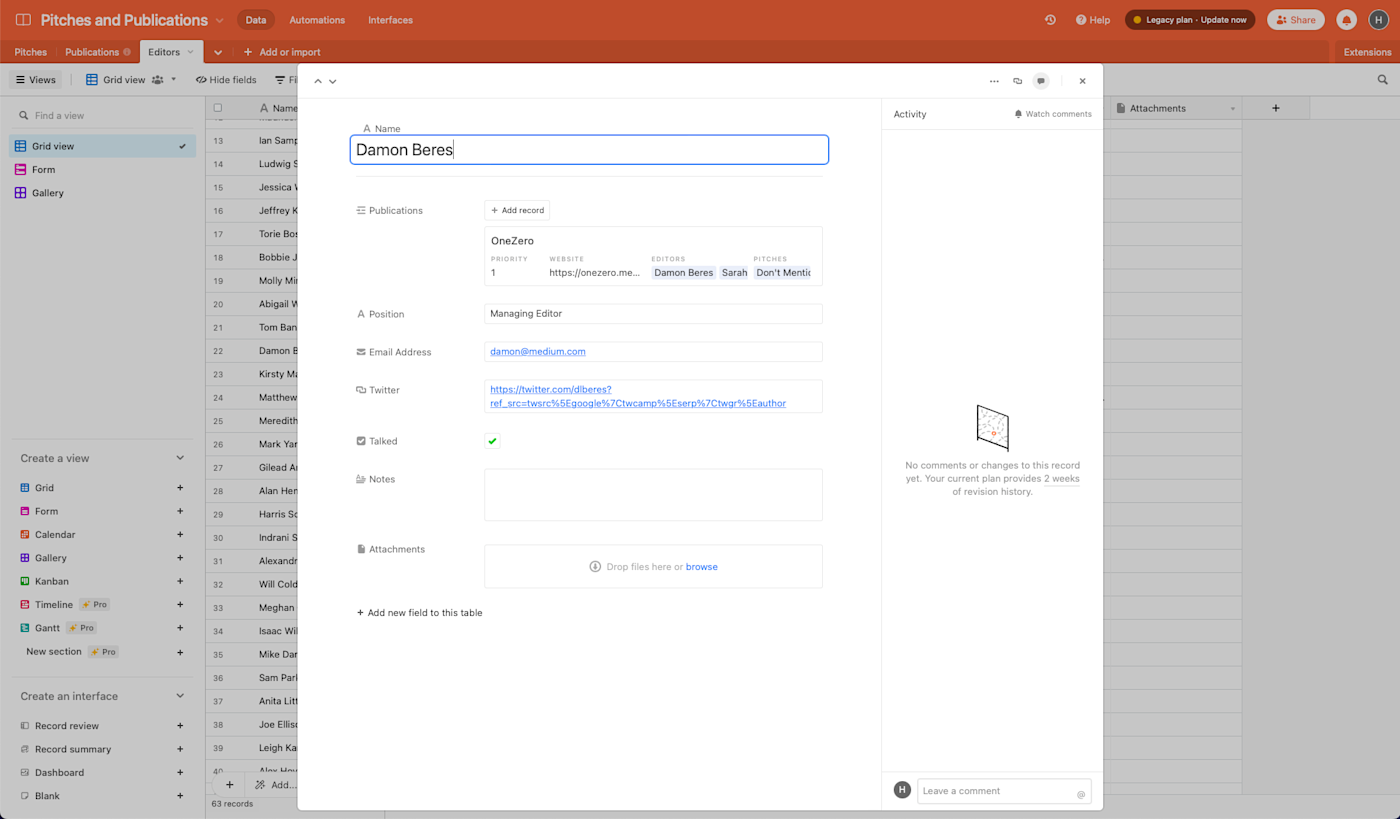
So if you filter or sort things, you can't accidentally reassign all your employee IDs. It looks like a spreadsheet, but when configured correctly, it's significantly smarter than a spreadsheet—though a lot easier to use than a traditional database sitting on a server somewhere.
Airtable also offers different ways for you to enter and view your data. You can use it to make a database of your customers, plan and track a marketing campaign, manage the inventory of your online store, and much more. You can see things as a Kanban board or on a calendar, assign things as to-dos, and check them off when they're done.
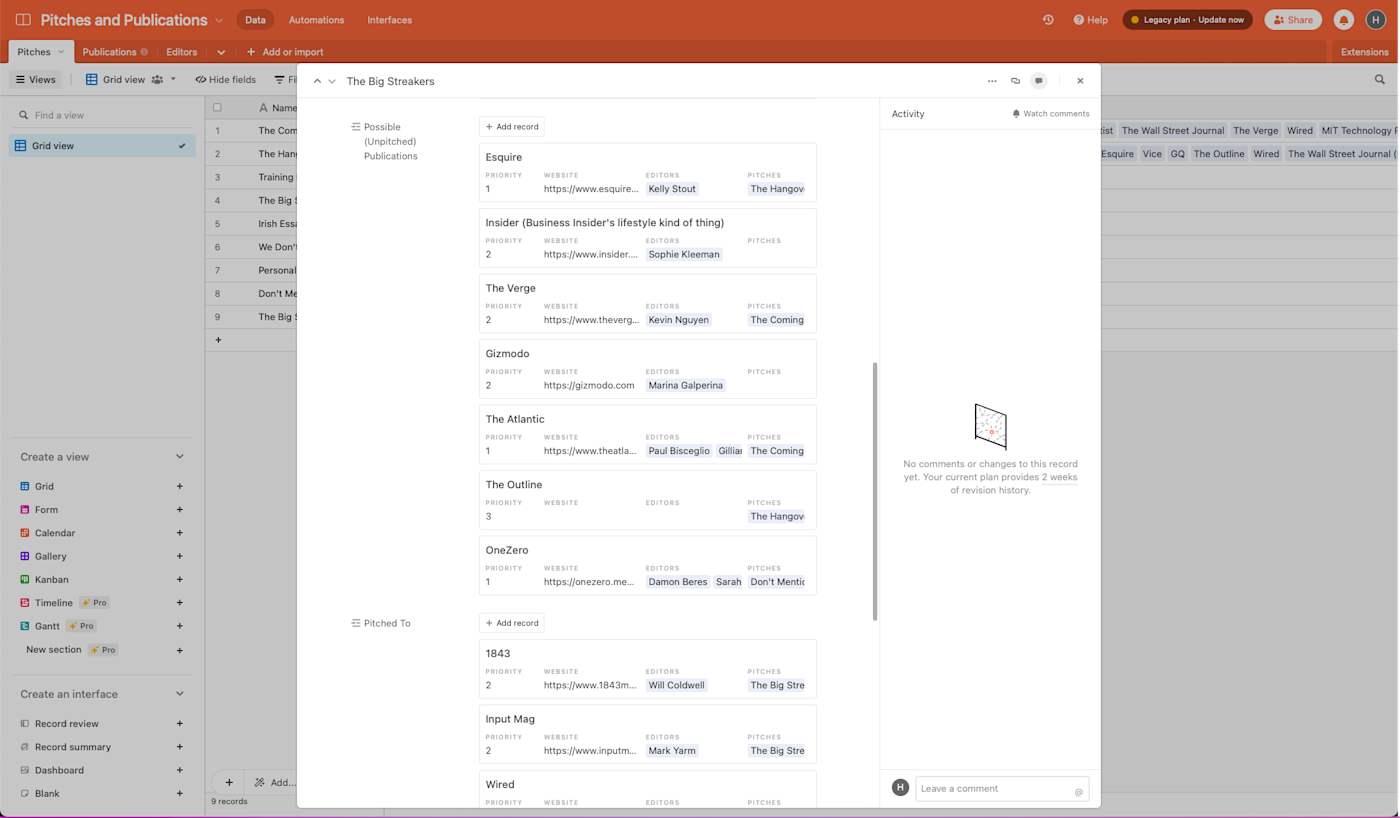
Notion does offer databases, but they don't look anything like this.
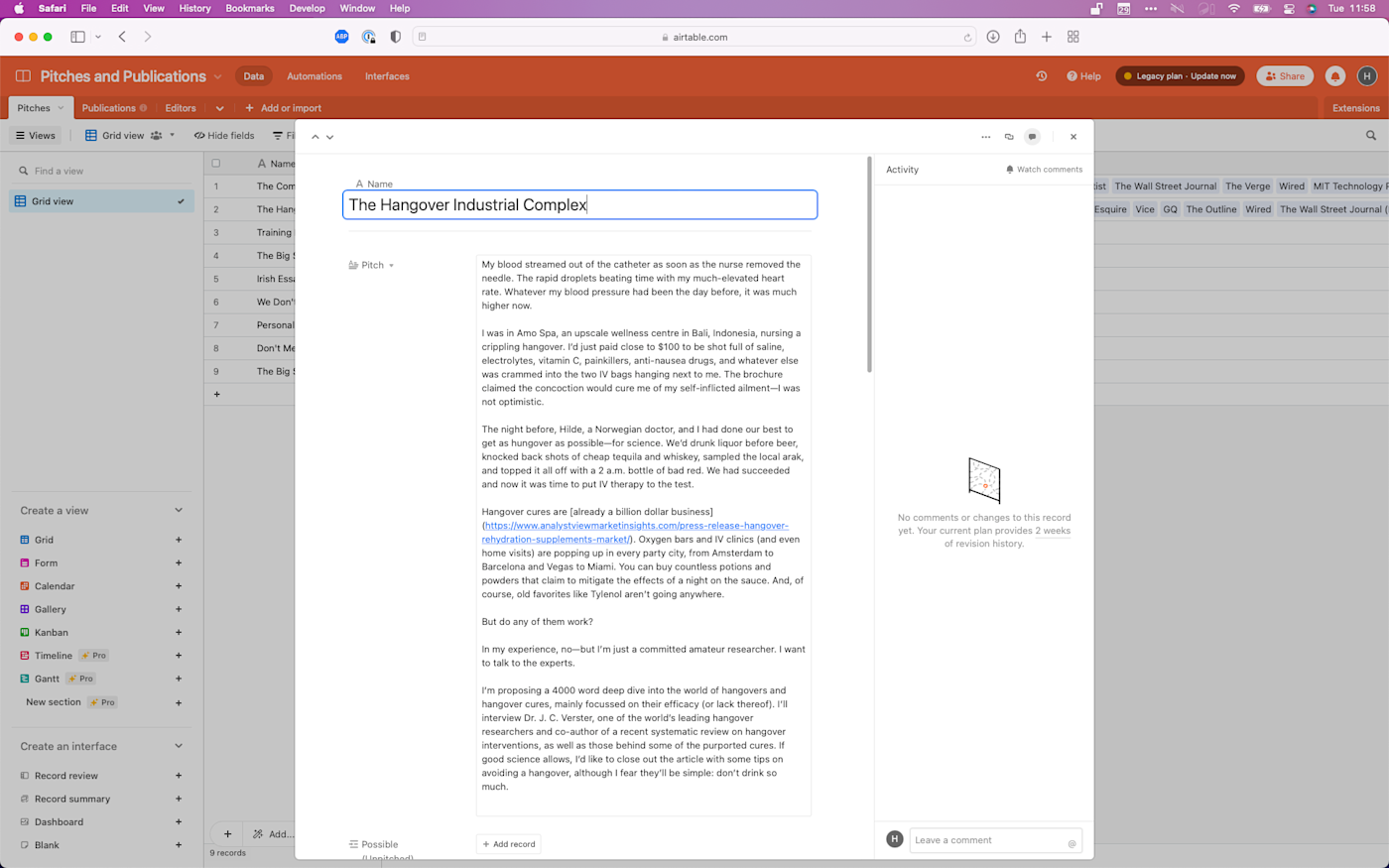
All its databases are collections of individual pages. You can give each page properties like due dates, assign them to specific people, and view, filter, and sort through them as a database table—but you don't get anything close to the same raw power you get with Airtable. Notion's databases can work for an employee directory, but would probably be an inefficient way to handle, say, a 1,000-respondent survey with lots of different questions. To get an idea of how Notion's databases work, take a look at this article onbuilding a second brain in Notion.And while you can add as much text as you like to a record and create an interface or view that allows you to see it clearly, Airtable doesn't handle text as intuitively as Notion. There's a fair amount of setup necessary to get an Airtable base to the point where it would work well as a notes app, for example, and even then, it wouldn't be as nice to use as Notion. In the screenshots, you can see how I use Airtable to keep track of article pitches: it handles the important information really well, but it's not the best for large blocks of text.
Airtable has more powerful automations
For automations and integrations, Airtable is the more powerful app—though mostly because it handles data in a much more structured way.
Bases themselves can be automated, and Airtable integrates with over 1,000 websites and apps—including Zapier, which extends that to thousands of more apps. You can evenuse it to build custom applications.You can absolutely
connect Notion to other apps (includingwith Zapier); you'll just be a bit more limited in what you can do.Here are some ideas for how to start automating Airtable and Notion:
Both are powerful, easy to use, and great for collaboration
While their core features and use cases are different, Notion and Airtable do have some similarities.
-
Both are big on collaboration. While it's possible to use Notion and Airtable by yourself, they're designed for teams to work together. In both, tasks can be assigned, information can be shared or restricted, people can be tagged, and everyone can discuss things in comments. Neither is inherently better for collaborating—it totally depends on what you want to collaborate on.
-
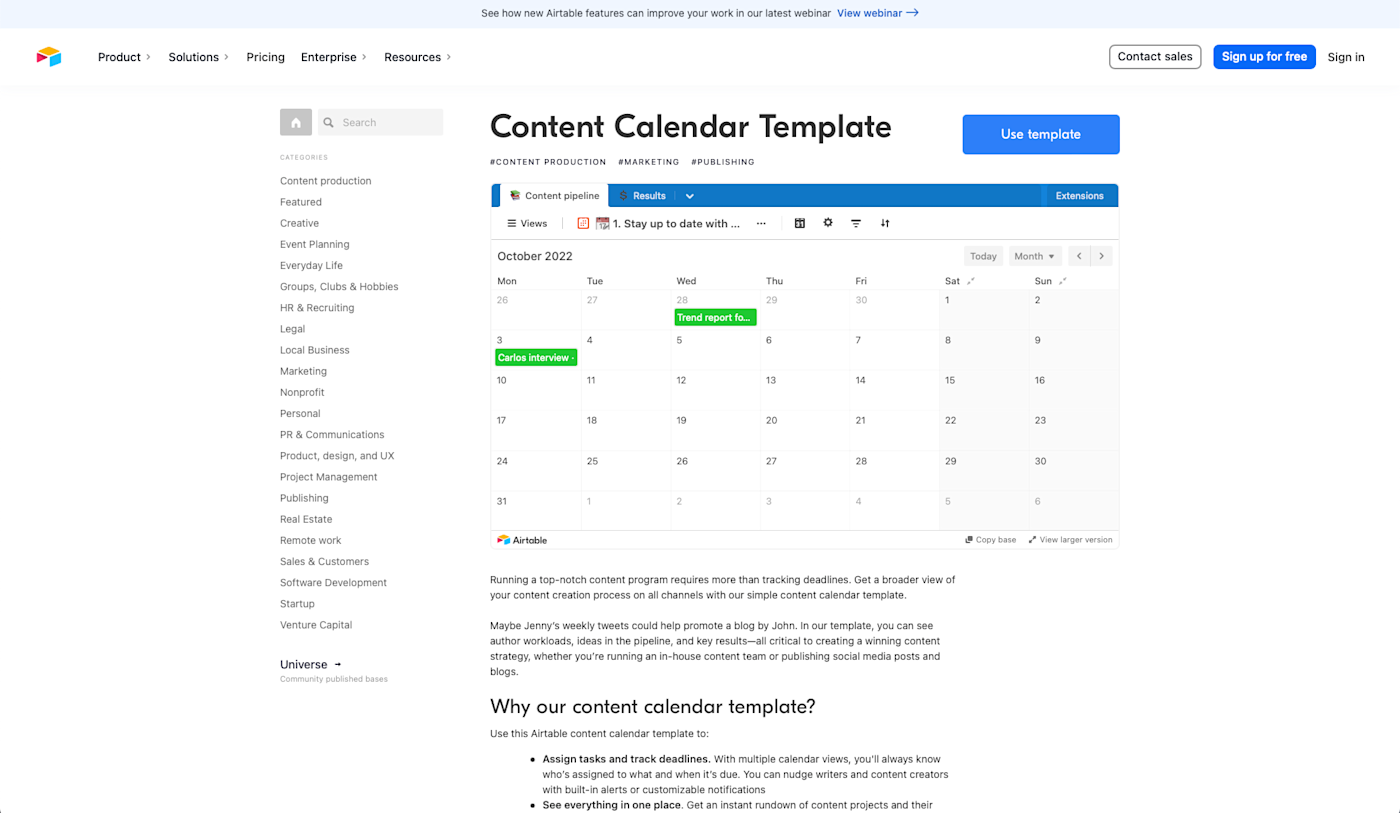
Both have lots of templates for common use cases that you can use to get started.
-
Both are easy to use for what they do. They're advanced tools that will require some setup, so don't expect either one to work perfectly for your organization right out of the box. From an abstract point of view,
Airtable is a bit harder to get to grips with as the concept of a database is less familiar for most people, but the app itself isn't any more difficult to use than Notion.
Notion vs. Airtable: Which to choose?
It's hard to say one app is objectively superior to the other. There are some things you can build in both Notion and Airtable, like an employee database or content calendar, but, for the most part, they're best used for different things. Notion allows you and your team to collaborate to make documents, plans, and other text-based resources; Airtable allows you and your team to collaborate using a shared database.
Choosing between Notion and Airtable should be relatively simple: both are awesome team productivity apps, but they do different things.
-
If you're looking for a supercharged Notes app for your entire organization to use, Notion is the obvious choice.
-
If you want a database that can handle all the data your company has in a structured way, Airtable is the option to go with.
It's also quite possible that you'll want both apps. There's no reason that you can't use Notion as a company resource and Airtable to manage some key operations.
Related articles: